A receipt is folded beneath a loose button. Sunglasses rest on two unopened letters. Somewhere under that small pile is the key you need. Using a hypothetical six-item inventory, we can turn this muddled front-door tray into a landing place shaped around two moments: arriving home and leaving again.
Label the six-item exercise
Consider this explicitly hypothetical scene: Jordan lives in a small apartment and has one shallow tray on a cabinet beside the front door. On Monday evening, it contains exactly six items: apartment keys, sunglasses, a transit card, an unopened letter, a receipt and a loose coat button.
Jordan writes the six names on a scrap of paper, then adds one label beside each: DEPARTURE for the keys, sunglasses and transit card; PAPER for the letter and receipt; REPAIR for the button. These labels describe the next action attached to each object. They also reveal that the little tray has accumulated three different jobs.
Give the tray one clear job
Jordan decides that the tray will hold objects gathered before leaving and returned immediately after arriving. This is a small rule, but it settles half the inventory at once.
The apartment keys stay because Jordan takes them when leaving and drops them back after coming home. The transit card stays for the same reason. The sunglasses also stay because they are normally picked up on the way out and returned at the door.
Jordan places the keys at the front, the transit card beside them and the sunglasses behind both. The exact arrangement is hypothetical and deliberately simple: the frequently grabbed items remain easy to see, while the larger glasses case does not cover them.
Move three objects toward their next actions
The unopened letter moves to the spot where Jordan opens and reads mail. Its next step requires attention to paper, so leaving it in the tray would turn the entrance into a second mail pile.
The receipt moves to a folder for papers awaiting a keep-or-discard decision. Jordan does not have to make that decision at the door; the receipt simply needs to wait in the place where the decision will eventually happen.
The loose button moves to the sewing tin. Although it came from a coat worn outside, its next action is a repair. Putting it with thread and needles means the necessary pieces will meet in one place.
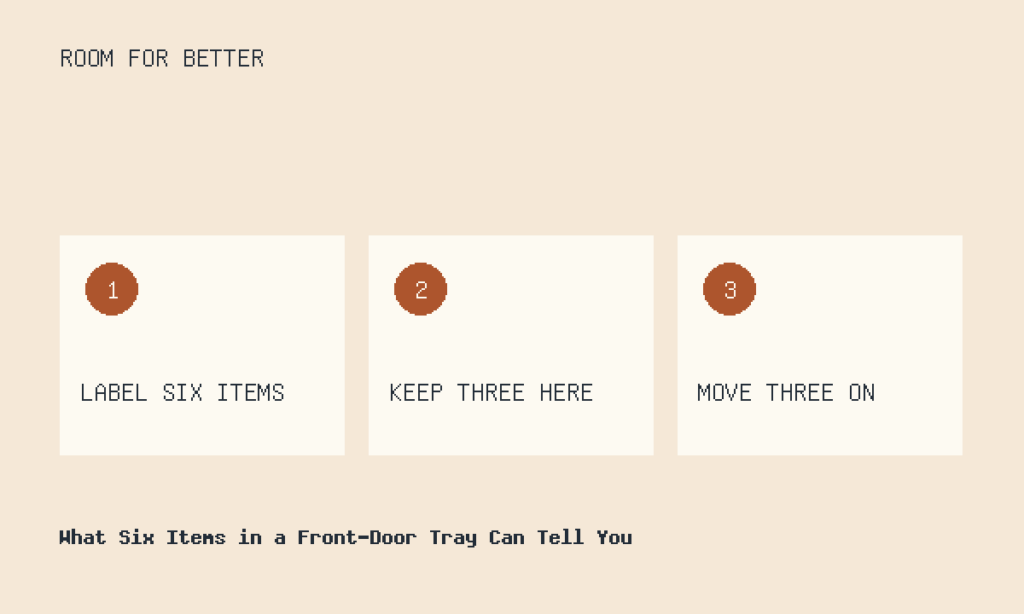
The result of the exercise is specific: three objects stay and three move. Nothing has been discarded merely to make the tray look sparse, and the moved items have destinations connected to what Jordan plans to do with them.
Allow one useful exception
New objects will still pause in the tray. When that happens, Jordan can ask two questions: Will I pick this up when I leave? Will I return it here when I arrive? Two yes answers make a strong case for staying. A no answer suggests the object is waiting for another kind of action.
A letter that must be mailed tomorrow is the practical exception. Jordan can place it partly beneath the keys for one night because it needs to join the next departure. Once the letter has been mailed, its temporary place in the tray disappears.